Cellular Energy Power Stations: How Your Mitochondria Help Keep You Strong, Active and Energized
Feeling Less Energetic as You Age? Your Mitochondria May Be Part of the Story.
By Michael Edwards, Anti-Aging Expert
First: What Can I Do to Support My Mitochondria?
Start with the basics that actually move the needle: move regularly, challenge your muscles, get enough sleep, eat a nutrient-rich diet, and avoid treating supplements as a substitute for those habits.
That may sound less exciting than a longevity pill, but it is useful news. Your mitochondria are remarkably responsive to how you live. Exercise—both aerobic and resistance training—can stimulate adaptations in the mitochondrial network of older muscle. So if your goal is to stay energetic, strong, and independent, you can begin working on the system today.
What Are Mitochondria—and Why Should I Care?
Mitochondria are tiny structures inside most of your cells. Their best-known job is helping convert nutrients into ATP, the usable energy that powers cellular work. Think of them as your cellular energy power stations.
Your muscles depend heavily on this energy system, which is one reason mitochondrial health is often discussed alongside stamina, strength, metabolism and healthy aging. Mitochondria also participate in cell signaling, stress responses and quality-control processes.
Aging is associated with changes in mitochondrial function, but age is not acting alone. Physical activity matters enormously: inactivity can worsen mitochondrial characteristics, while training can improve them. That distinction is important because it turns mitochondrial health from an abstract aging problem into something you can influence.
The Most Powerful Mitochondrial Strategy May Be Free
If a supplement advertisement makes mitochondrial health sound as though it begins in a bottle, start with exercise instead.
A systematic review of randomized trials in older adults found beneficial mitochondrial changes after endurance, resistance and combined exercise, although the evidence base was small and study quality varied. More recent reviews continue to identify exercise as an important regulator of mitochondrial quality control during aging.
For practical purposes, combine movement that challenges your cardiovascular system—such as brisk walking, cycling, or swimming—with resistance exercise that asks your muscles to work against load. The goal is not athletic perfection. It is giving aging muscle a reason to remain capable.
Build Muscle, Not Just Miles
Strength becomes increasingly important with age. Resistance training is widely recommended to help preserve muscle mass, strength, and physical function in older adults, and mitochondrial adaptations appear to be part of that story.
That makes regular strength training useful for many adults, adjusted for fitness, health and medical guidance. Body-weight exercises, resistance bands, machines, and free weights can all provide resistance. Consistency matters more than choosing the trendiest method.
What About Sleep and Food?
Mitochondria do not operate separately from the rest of you. Adequate sleep, sufficient protein, and overall diet quality support the tissues in which mitochondria work. Fruits, vegetables, legumes, whole grains, nuts, healthy fats and quality protein also provide nutrients involved in normal energy metabolism.
If persistent fatigue is the reason you are reading this, however, do not automatically blame your mitochondria. Fatigue can have many causes—including sleep problems, medication effects, anemia, thyroid disorders, cardiovascular conditions and others—and deserves appropriate medical evaluation when it is new, unexplained or persistent.
Three Supplements Getting Attention
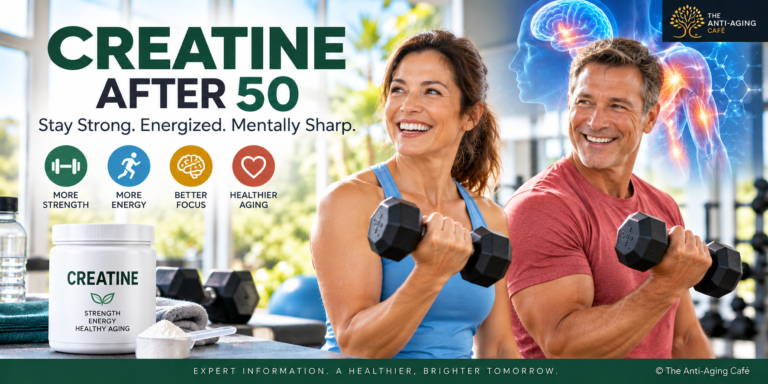
Creatine — the practical veteran. Creatine helps replenish rapid cellular energy in muscle and has a much larger human evidence base than many fashionable longevity ingredients. A 2025 meta-analysis involving 20 studies and 1,093 older participants found an additional improvement in one-repetition-maximum strength when creatine was combined with exercise training. That does not make creatine a mitochondrial miracle, but it makes it highly relevant to the real-world goal of maintaining strength as we age.
Urolithin A — promising, but still proving itself. Urolithin A is produced from certain food compounds by some gut bacteria and is being studied for mitophagy—the cellular process involved in clearing damaged mitochondria. Human trials have reported encouraging signals in muscle endurance and mitochondrial-related biomarkers. But a 2026 meta-analysis found only five small randomized trials and concluded that evidence for physical performance remains statistically inconclusive and low-certainty. Interesting? Yes. Proven anti-aging solution? No.
CoQ10 — more than just a mitochondrial supplement. Coenzyme Q10 plays an essential role in the mitochondrial energy system that helps cells produce ATP, and the heart—one of the body’s most energy-demanding organs—has been an important focus of CoQ10 research. Cardiologist Dr. Stephen Sinatra was an early advocate and investigator of CoQ10 in cardiovascular care and wrote extensively about its potential role in heart health. Subsequent independent research has strengthened some of that interest: the randomized Q-SYMBIO trial in patients with moderate-to-severe chronic heart failure reported fewer major cardiovascular events after two years among patients receiving CoQ10 in addition to standard treatment. That doesn’t mean everyone needs a CoQ10 supplement, or that it has been proven to slow aging. But compared with many fashionable “mitochondrial” ingredients, CoQ10 has a substantial biological rationale and noteworthy human cardiovascular research behind it.
The Anti-Aging Café Action Plan
Move every day. Break up long periods of sitting and give your muscles regular work.
Train for both stamina and strength. Walking is excellent; adding progressive resistance makes the plan more complete.
Protect recovery. Sleep and adequate nutrition are part of the training response, not optional extras.
Use supplements selectively. Creatine has practical human evidence; urolithin A is intriguing but still emerging; CoQ10 should be matched to the individual rather than treated as a universal anti-aging pill.
Investigate persistent fatigue. Do not let a supplement label distract you from a potentially treatable medical cause.
What Should I Look for in a Product?
If you decide to use a supplement, favor a clearly identified ingredient and dose, transparent labeling, and credible independent quality testing. Avoid proprietary blends that make it difficult to know what you are actually taking. If you take prescription medications or have a medical condition, discuss supplements with your clinician or pharmacist.
This is where The Anti-Aging Café can help: rather than presenting a wall of products, we can point readers toward carefully selected options that match the evidence discussed in the article.
Bottom Line
Your mitochondria really are cellular energy power stations—but supporting them is not about finding one magic capsule. The strongest practical message is much more empowering: aging muscle can still respond to exercise.
Build strength. Keep moving. Recover well. Eat well. Then, if you want to add a supplement, choose one because the human evidence fits your goal—not because the marketing promises to “reverse aging.”
Our verdict: Start with movement and muscle. Consider creatine as an evidence-backed adjunct to training; watch the developing urolithin A research; and treat mitochondrial supplements as supporting players, not the main event.
Selected Research & Sources
1. Lippi L, et al. Impact of exercise training on muscle mitochondria modifications in older adults: a systematic review of randomized controlled trials. Aging Clin Exp Res. 2022;34(7):1495–1510. PMID: 35079977.
2. Jeong I, et al. Mitochondrial Adaptations in Aging Skeletal Muscle: Implications for Resistance Exercise Training to Treat Sarcopenia. Life (Basel). 2024;14(8):962. PMID: 39202704.
3. Dao MC, et al. Effects of Urolithin A supplementation on muscle health outcomes in humans from randomized controlled trials: systematic review and meta-analysis. 2026. PMID: 42559151.
4. Liu S, et al. Effect of Urolithin A Supplementation on Muscle Endurance and Mitochondrial Health in Older Adults: A Randomized Clinical Trial. JAMA Netw Open. 2022. PMID: 35050355.
5. Impact of creatine supplementation and exercise training in older adults: a systematic review and meta-analysis. 2025. PMID: 41062952.
6. Distefano G, Goodpaster BH. In vivo mitochondrial function in aging skeletal muscle: capacity, flux, and patterns of use. PMID: 27539499.
7. Mortensen SA, et al. The effect of coenzyme Q10 on morbidity and mortality in chronic heart failure: results from Q-SYMBIO: a randomized double-blind trial. JACC Heart Fail. 2014;2(6):641–649. PMID: 25282031.
Editorial Note
This article is for educational purposes and is not medical advice. Mitochondrial biology and longevity research continue to evolve. Changes in laboratory biomarkers should not be interpreted as proof that a supplement slows aging or increases lifespan. Individual health conditions, medications, supplement quality, and dose all matter.